September 16, 2026
90 New PhD Students from Six Continents
Five-year paid position at ISTA starts with research group rotation
The Institute of Science and Technology Austria (ISTA) is growing and so is the number of PhD students starting each year. On September 15, 2026, the Institute kicked off its academic year by welcoming a record 90 new PhD candidates from 32 countries across six continents to campus. ISTA’s fully funded English-language PhD program begins with a feature rarely found in Europe—a rotation through different research groups designed to foster interdisciplinary thinking among the new arrivals.
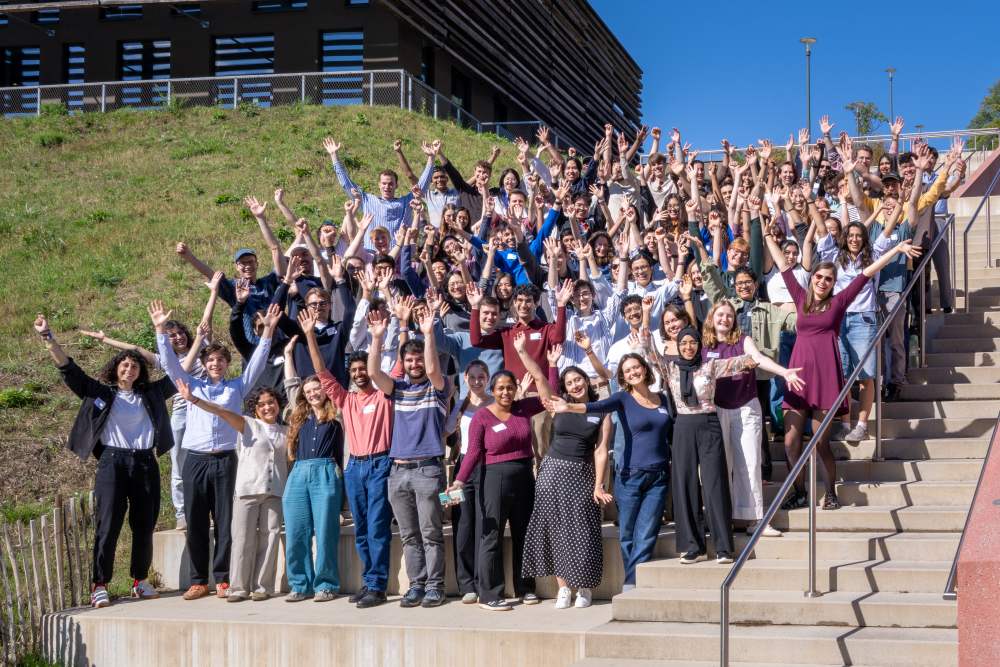
Mario de Bono, Dean of ISTA’s Graduate School, underlined the excellence and potential demonstrated by those 90 young researchers throughout the rigorous selection process. Having outcompeted over 6,000 other applicants, they have now arrived on ISTA’s campus in Klosterneuburg, just outside the Austrian capital Vienna, to start the next stage of their research careers. To adapt to life in the country, some international PhD students were able to choose to live on campus for their first year.
“We are delighted to welcome you to an institute committed to educating the next generation of scientists,” de Bono said. “ISTA offers a vibrant, international, and interdisciplinary environment set in beautiful natural surroundings, with cutting-edge laboratories and opportunities to engage beyond academia—through ISTA’s technology transfer arm XISTA, and through science education with the VISTA Science Experience Center.”
‘Step outside your comfort zone and explore’
De Bono stressed that a new beginning offers opportunities to challenge oneself. One aspect of the PhD program is the Institute’s unique rotation system: During their first year, PhD students conduct research in at least three groups of their choice, gaining experience with methods and academic questions from other fields. In this way, interdisciplinary thinking and scientific exchange across disciplines are already fostered at an initial stage.
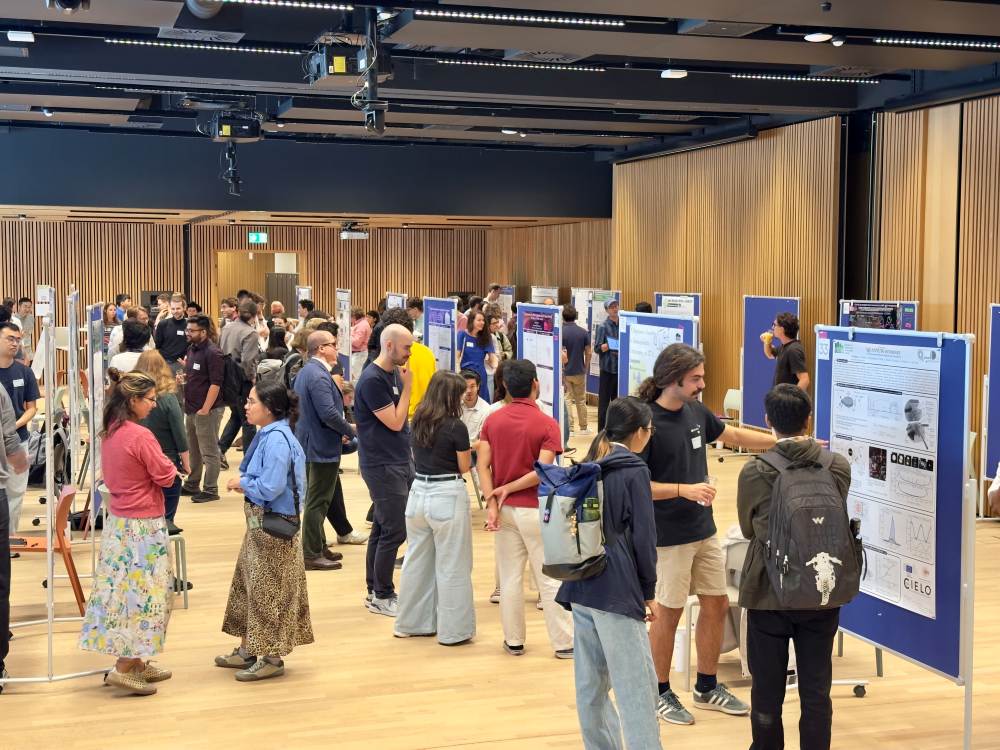
De Bono appealed to the new arrivals to make use of this opportunity for growth.
“Through your choice of courses and rotations, we encourage you to step outside your comfort zone, explore the interfaces between disciplines, and develop new strengths,” he said.
“Discoveries often happen at these interfaces. Our rotation system makes it possible for you to experience diverse research areas and styles before selecting your PhD project, and our structure offers multiple opportunities to find scientific mentors who will support your work. The philosophy we aspire to is simple: everyone mentors everyone else.”

ISTA PhD cohorts: From seven to 90 students
After officially opening its doors in 2009, the Institute welcomed its first seven PhD candidates in 2010. Reflecting ISTA’s rapid growth over the past 15 years, the Graduate School now counts more than 400 PhD students on campus. Looking ahead, ISTA aims to expand further—from just over 90 research groups today to 150 groups by 2036—creating even more opportunities for PhD positions.
ISTA’s PhD program is fully funded and run in English, with applications accepted annually starting in the fall until January of the following year.
Virtual Student Open Day
Those interested in ISTA’s PhD program are encouraged to join an upcoming Virtual Student Open Day on November 18, 2026. The online event offers an opportunity to learn more about the Graduate School and connect with the ISTA community. Registration for the day is open now.