September 3, 2026
€9.2 Million in EU Grants for ISTA
Five ERC Starting Grants will fund innovative projects run by early-career researchers
Five early-career researchers at the Institute of Science and Technology Austria (ISTA) have secured a total of 9.2 million Euro in highly selective Starting Grants from the European Research Council (ERC). With projects focused on AI, astrophysics, bacterial immune systems, quantum matter, and optics, this major success underscores ISTA’s ability to attract exceptional young talent and foster ambitious, curiosity-driven science.
Awarded annually to researchers with up to ten years of experience since finishing their PhD, this year’s ERC Starting Grants call was especially competitive: it received 22 percent more submissions than last year and only 8.8 percent of the record 4,807 proposals were selected for funding.
ISTA leads Austria in this call, with five projects awarded ERC Starting Grants—more than any other institution in the country.
ISTA grant recipients and their projects are listed below in alphabetical order:
Denitsa Baykusheva: €1.7 million for a new microscope to study elusive quantum matter
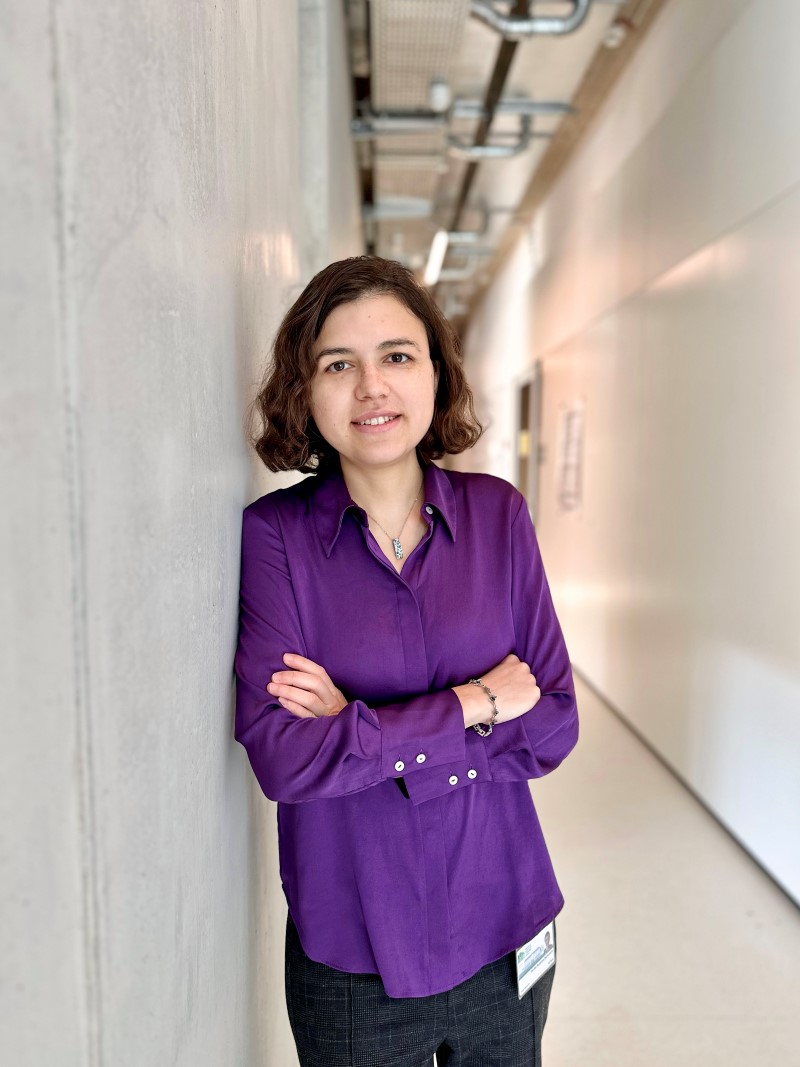
When light “excites” certain materials, it can create so-called excitons. Since the 1960s, theories have predicted that, under the right conditions, large numbers of excitons can start behaving as a single quantum object—a condensate with remarkable properties such as frictionless flow. However, this phenomenon has proven extremely difficult to observe.
With the PhotoAlqemy project, Assistant Professor Denitsa Baykusheva aims to develop a new microscope to detect this highly elusive state of matter, understand how it behaves, and learn how to control it. The instrument will use long-wavelength (terahertz) radiation to probe the dynamics of condensate, combined with techniques that analyze the quantum states of the light it emits.
“In essence, PhotoAlqemy asks a fundamental question: How can interactions between microscopic particles give rise to complex order on a large scale?” explains Baykusheva. “In the longer term, learning to control these states could open new possibilities for optoelectronics, energy transport with minimal loss, and efficient conversion of light.”
Since joining ISTA in 2024, Baykusheva has built two complementary laboratories from the ground up. One uses intense terahertz fields to probe and control collective behavior in materials. The other is working to speed up diamond-based quantum sensing to capture rapid transformations inside materials.
Baykusheva, who is Bulgarian, says the grant will support a multidisciplinary team and the essential equipment needed to carry out the project.
Jack Bravo: €1.6 million to better understand how bacteria tell friend from foe
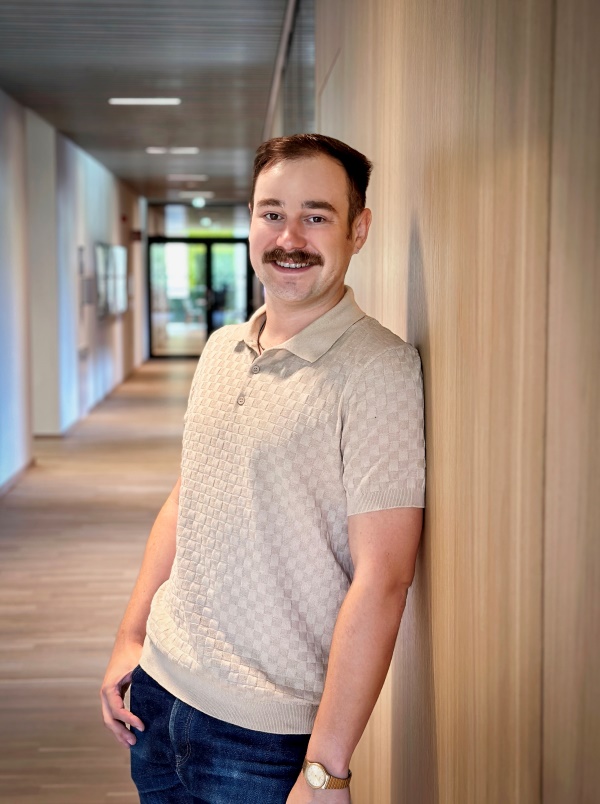
How does a bacterial cell recognize its own DNA and leave it alone while destroying DNA that doesn’t belong to it? How does it make that call correctly, every single time, without ever confusing the two? These are the questions behind the ERC-funded DEPLETER project, led by Assistant Professor Jack Bravo.
“Bacteria have evolved remarkably sophisticated ways to defend themselves against foreign DNA,” says Bravo, a structural biologist from the United Kingdom who also joined ISTA in 2024. “We want to understand, at the molecular level, how these systems recognize their targets and how that recognition is converted into DNA destruction.”
The implications could be far-reaching.
Going forward, understanding these molecular mechanisms could open new avenues for biotechnology, adds Bravo. By revealing how bacterial immune systems recognize and eliminate specific DNA targets, the project could provide new principles for developing tools to manipulate or remove unwanted DNA.
“Understanding how bacteria defend themselves from invaders gives us a window into the molecular mechanisms underlying bacterial immunity,” says Bravo. “These systems have evolved sophisticated ways to recognize and destroy DNA, and understanding how they work could eventually reveal principles that are useful for biotechnology.”
Bravo says the ERC grant will unite kinetics, structural biology, and high-throughput genomics to reveal immune mechanisms in unprecedented detail. It will fund staff and the cryo-EM and sequencing infrastructure needed to study these systems in action.
Ilaria Caiazzo: €1.9 million for studying ‘white dwarfs’

White dwarfs are stellar remnants that represent the final stage in the lives of most stars, including our Sun. Some eventually become pairs that, if close enough, emit gravitational waves, spiral toward each other and ultimately merge.
With the MERGERS project, Assistant Professor Ilaria Caiazzo aims to understand these dramatic events by finding and studying the unusual remnants they leave behind, using them to reconstruct how the mergers happened and reveal their role in the lives and deaths of stars.
“Double white dwarf mergers are thought to produce some of the most common stellar explosions and some of the most exotic stars in the Universe,” explains Caiazzo, a knighted Italian astrophysicist who specializes in stellar evolution.
Caiazzo notes that understanding what happens when these systems merge is crucial as they will likely be among the key sources of gravitational waves detected by the European Space Agency’s Laser Interferometer Space Antenna, known as LISA—the first space-based observatory dedicated to studying gravitational waves whose launch is planned for 2035.
“The project will provide the missing link between the systems LISA will observe before such mergers and the stars and explosions they leave behind,” she says.
The ERC Starting Grant will support a dedicated team to identify and model stellar-merger remnants using telescope observations and computational analysis.
Francesco Locatello: €1.5 million for scientific AI tools
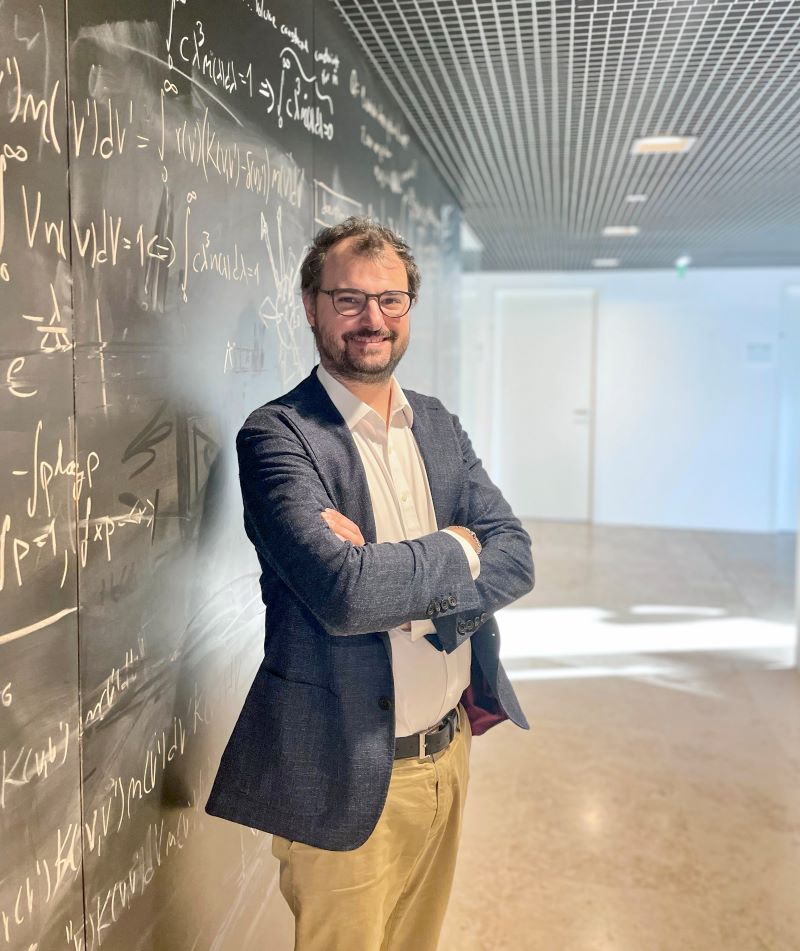
Distinguishing coincidence from cause-and-effect relationships has long been a central challenge in science. As research problems grow more ambitious and datasets become larger and more complex, scientists increasingly rely on artificial intelligence to continue to progress. However, today’s AI systems primarily detect patterns, rather than explain why they occur, which can lead to misleading or even false interpretations and conclusions.
Assistant Professor Francesco Locatello’s Causal-AIM project seeks to change that by turning AI models into instruments that detect and quantify causality in scientific experiments.
“AI is already transforming how science is done,” says Locatello, an Italian national who has led his own research group at ISTA focused on AI and causal learning since 2023. “In empirical fields like biology, ecology, and climate research, I believe AI can become part of the measurement process itself: a natural extension of the microscope, helping scientists interpret their data and accelerate discovery.”
Locatello says the ERC grant will fund a team of PhD students and a postdoc.
“Together, we’ll develop the core methods and apply them to real scientific problems across disciplines, something ISTA’s uniquely interdisciplinary environment makes possible,” he says.
Charles Roques-Carmes: €2.5 million for boosting X-ray technology

French physicist Charles Roques-Carmes joined ISTA as an assistant professor in June 2026 with the aim of turning fundamental knowledge about light into practical tools to help observe, measure and process information in new ways.
By building a new kind of X-ray detector that extracts significantly more information from every X-ray it receives, his ERC-funded XQMeta project will undoubtedly help contribute to this goal.
“We will add extremely small optical structures to the materials used in X-ray cameras so that the light they produce reveals more precisely where and how each X-ray was absorbed,” says Roques-Carmes. “Combined with advanced image-processing methods, this could produce sharper images while using less radiation.”
Roques-Carmes explains that current X-ray systems often face a trade-off between producing a sharp image and detecting X-rays efficiently.
“By getting more information from each X-ray, this research could ultimately enable lower-dose and higher-resolution medical imaging, earlier detection of small abnormalities, and improved inspection of batteries, microelectronics, and other materials.”
The grant will support a dedicated research team and the specialized equipment, materials, and computational tools needed to develop the new imaging platform.
ISTA sees continued ERC success
Since opening its doors in 2009, ISTA has become one of the most successful research institutions in Europe when it comes to securing ERC grants.
While the overall success rate for ERC core grants typically falls between 8% and 15%, ISTA boasts an impressive 46%. With the most recent awards, 79% of ISTA’s professors have now received at least one ERC core grant, while 24% have been awarded several, including three professors who have each been awarded three.
Core grants include Starting Grants, Consolidator Grants, Advanced Grants, and Synergy Grants.